In high-temperature industrial environments, insulation materials are not selected for convenience, but for long-term performance, safety, and reliability. Ceramic fiber tape is widely used in applications where conventional insulation materials fail due to extreme heat, steam exposure, or continuous thermal cycling. Designed for demanding industrial conditions, ceramic fiber tape provides stable thermal insulation and effective sealing for equipment operating under severe temperatures.
This page offers a complete engineering-focused overview of ceramic fiber tape, including its material characteristics, performance advantages, application scenarios, and selection considerations for industrial systems.

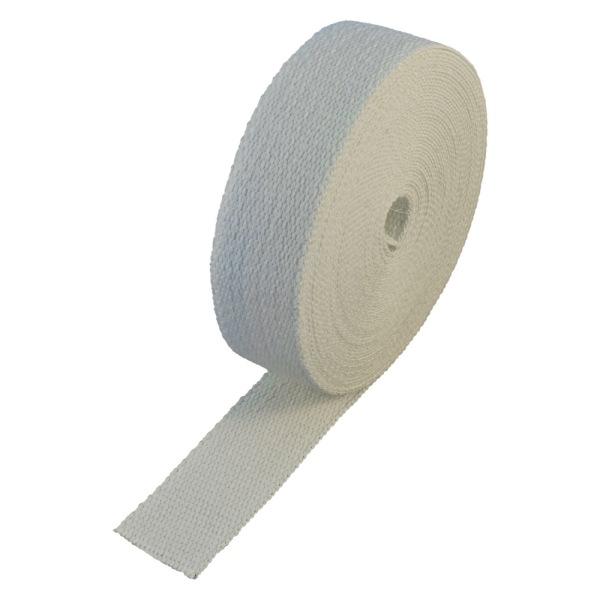
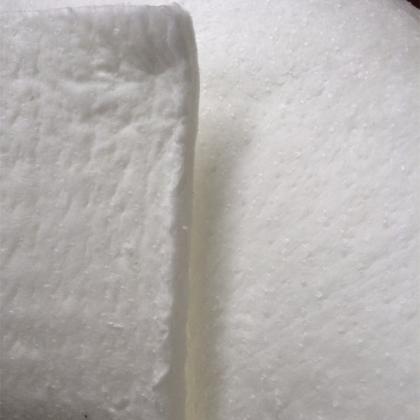
Ceramic fiber tape is a woven insulation tape manufactured from high-purity alumina-silica fibers. These fibers are engineered to withstand sustained exposure to extremely high temperatures while maintaining structural stability and insulation efficiency. The woven construction gives the tape flexibility, tensile strength, and dimensional consistency, allowing it to perform reliably in dynamic industrial environments.
Unlike organic or mineral-based insulation materials, ceramic fiber tape does not melt, burn, or significantly degrade when exposed to direct heat. This makes it suitable for continuous service in applications where temperatures exceed the limits of fiberglass or mineral wool products.
The effectiveness of ceramic fiber tape lies in its ability to interrupt heat transfer through low thermal conductivity and high temperature resistance. When applied to hot surfaces, pipes, or sealing points, the tape reduces conductive and radiant heat loss while maintaining mechanical integrity.
Ceramic fiber tape performs reliably under conditions involving:
Continuous high operating temperatures
Rapid heating and cooling cycles
Direct radiant heat exposure
Steam and moisture-rich environments
Because the fibers are inorganic and chemically stable, the tape does not soften or lose strength when subjected to prolonged heat. This stability is critical for industrial equipment that operates around the clock or experiences frequent thermal fluctuations.
From an engineering perspective, ceramic fiber tape is selected not only for its temperature rating, but for its predictable behavior in harsh environments. Compared to alternative insulation tapes, it offers a combination of thermal, mechanical, and environmental advantages.
Ceramic fiber tape provides:
Reliable insulation at temperatures where fiberglass tapes fail
Consistent sealing performance under thermal expansion
Resistance to steam penetration and moisture absorption
Compatibility with metal, ceramic, and composite surfaces
These properties make ceramic fiber tape a preferred solution for critical systems where insulation failure could lead to equipment damage, efficiency loss, or safety risks.
Ceramic fiber tape is used across multiple industries where heat containment and sealing reliability are essential.
In industrial furnaces and kilns, ceramic fiber tape is used to seal doors, inspection ports, expansion joints, and burner interfaces. The tape helps prevent heat leakage, stabilizes internal temperatures, and protects structural components from thermal stress.
High-temperature exhaust systems in power generation, manufacturing, and marine applications rely on ceramic fiber tape to insulate ducts, manifolds, and flanges. The tape reduces radiant heat, protects adjacent components, and improves overall system efficiency.
Steam systems demand insulation materials that can withstand both heat and moisture. Ceramic fiber tape maintains insulation performance under continuous steam exposure, making it suitable for wrapping valves, joints, and pipe transitions.
Ceramic fiber tape is often used as a sealing element in high-temperature joints, access panels, and equipment interfaces. Its flexibility allows it to conform to irregular surfaces while maintaining thermal and mechanical stability.
Heat loss is a direct contributor to increased energy consumption in industrial facilities. When heat escapes from pipes, furnaces, or exhaust systems, additional fuel or electricity is required to maintain operating temperatures.
Ceramic fiber tape helps improve energy efficiency by:
Reducing heat dissipation from hot surfaces
Maintaining consistent process temperatures
Minimizing temperature drop across joints and connections
These benefits translate into lower operating costs and improved thermal control, especially in systems that operate continuously or under high thermal loads.
Thermal stress is one of the primary causes of premature equipment failure. Repeated exposure to high temperatures can lead to metal fatigue, seal degradation, and structural deformation.
By insulating critical components, ceramic fiber tape:
Reduces surface temperatures and thermal gradients
Protects seals, gaskets, and fasteners from heat damage
Limits corrosion caused by condensation and temperature differentials
As a result, equipment experiences fewer heat-related failures, longer maintenance intervals, and improved operational reliability.
Proper installation is essential to achieve the full performance benefits of ceramic fiber tape. Surfaces should be clean and free of oil, dust, or loose debris before application. The tape should be wrapped evenly with consistent tension to ensure uniform insulation and sealing.
In high-vibration or high-pressure environments, ceramic fiber tape is typically secured using stainless steel wire, bands, or high-temperature fasteners. Correct installation ensures long-term stability and prevents insulation displacement during operation.
Choosing the appropriate ceramic fiber tape depends on several technical factors, including operating temperature, exposure conditions, and mechanical requirements. Engineers typically evaluate:
Maximum continuous operating temperature
Required tape thickness and width
Density and mechanical strength
Exposure to steam, chemicals, or vibration
Selecting a tape that exceeds the application’s temperature and environmental demands ensures consistent performance and longer service life.
Ceramic fiber tape is not a short-term fix, but a long-term thermal management solution. Its ability to maintain insulation performance under extreme conditions makes it suitable for industries where downtime, safety risks, and energy inefficiency are unacceptable.
Used correctly, ceramic fiber tape contributes to:
Improved system reliability
Reduced maintenance costs
Enhanced worker safety
Greater energy efficiency
These advantages explain why ceramic fiber tape remains a standard choice for engineers designing and maintaining high-temperature industrial systems.
Ceramic fiber tape plays a critical role in high-temperature insulation and industrial sealing applications. Its superior heat resistance, stability under steam exposure, and adaptability to complex geometries make it an essential material for furnaces, exhaust systems, steam lines, and industrial piping.
For engineers and maintenance professionals seeking a dependable solution to manage extreme heat, ceramic fiber tape offers proven performance, long service life, and measurable operational benefits. When thermal protection is a priority, ceramic fiber tape provides the reliability that industrial systems demand.
Specated Ipv6 Network