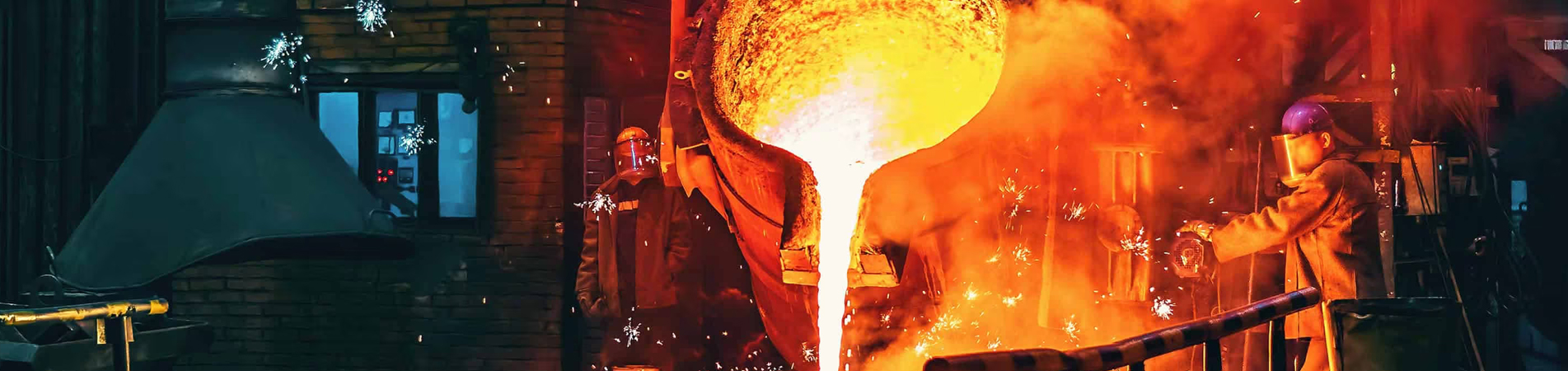
Высококремниевая защитная манжета для защиты от экстремальных температур
В области теплозащиты наступает момент, когда простое добавление еще одного слоя обычного стекловолокна перестает быть оптимальным решением.
Гидравлический шланг, проложенный рядом с корпусом печи, кабель, проложенный мимо выпускного коллектора, или измерительная линия, пересекающая зону высокотемпературного производства, могут оставаться механически исправными, даже если температура окружающей среды неуклонно выходит за пределы комфортного диапазона для обычных защитных материалов.
Здесь находитсярукав с высоким содержанием кремнеземастановится актуальным.
Высококремниевая защитная оболочка предназначена для применений, где защищаемый компонент должен оставаться гибким, доступное пространство не позволяет использовать жесткую изоляцию, а термическое воздействие достаточно сильное, чтобы оправдать использование конструкции из волокна, обогащенного кремнием.
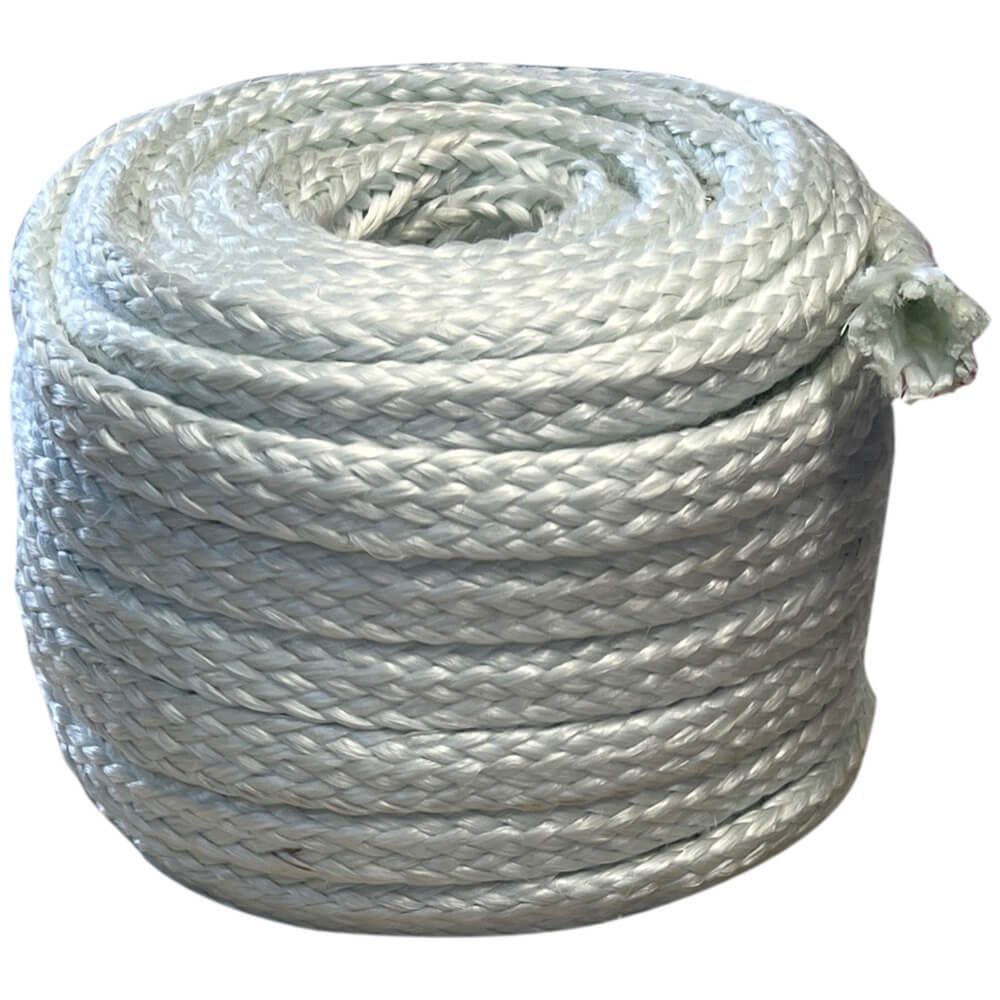
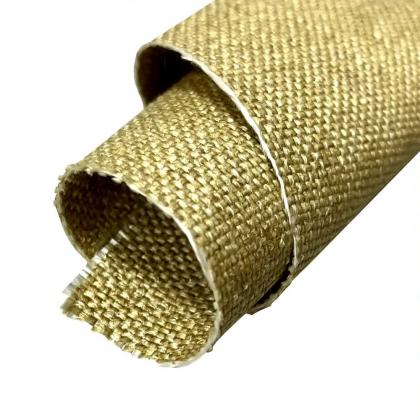
Компания BSTFLEX производиткремнеземные рукава и высокотемпературные кремнеземные рукавадля защиты промышленных шлангов, кабелей, проводов, труб и оборудования.
Когда применение препарата переходит в категорию с высоким содержанием кремнезема?
Ответ редко определяется одним лишь показателем температуры.
Две машины могут иметь одинаковую номинальную рабочую температуру, но при этом оказывать совершенно разную нагрузку на защитную оболочку.
Рассмотрим две следующие ситуации.
В первом случае кабель расположен на расстоянии 150 мм от горячей выхлопной трубы, через отсек которой проходит постоянный поток воздуха.
Во втором случае гидравлический шланг располагается на расстоянии 15 мм от панели доступа к печи и остается в том же положении на протяжении всей производственной смены.
Оба компонента могут подвергаться воздействию тепла, но интенсивность, продолжительность и способ теплопередачи различаются.
Высококремнеземная волоконная оболочка становится перспективным вариантом при наличии одного или нескольких из следующих условий:
- Источник тепла работает при температурах, превышающих обычные температуры для применения стекловолокна.
- Излученное тепло сохраняется в течение длительных периодов времени.
- Защищаемый компонент не может быть перенаправлен дальше от источника тепла.
- Вместо жесткой теплоизоляции необходим гибкий текстильный барьер.
- Установка включает в себя печи, вытяжное оборудование или оборудование для термической обработки.
- Конструктору необходим дополнительный температурный запас по сравнению с традиционным решением на основе стекловолокна.
- Рукав должен выдерживать многократные циклы нагревания и охлаждения.
Почему высококремнеземное волокно ведет себя иначе, чем стандартное стекловолокно?
Ключевое различие заключается не в цвете рукава или в том, что оба материала можно сплести в текстильные изделия. Разница в химическом составе волокон.
Традиционное стекловолокно уже является эффективным теплоизоляционным материалом и по-прежнему подходит для тысяч промышленных применений. Высококремнеземное волокно выбирается в тех случаях, когда требуется более высокое содержание кремнезема для достижения лучшей стабильности при более жестких термических воздействиях.
После соответствующей обработки волокно, богатое кремнеземом, может быть преобразовано в пряжу, а затем использовано для изготовления трубчатой защиты.
Это дает инженерам необычное сочетание:
- температурная способность минерального волокна
- гибкая установка
- Небольшие габариты при монтаже по сравнению со многими жесткими системами.
- совместимость с изогнутыми шлангами и кабельными трассами
- доступность в виде плетеных и текстурированных структур
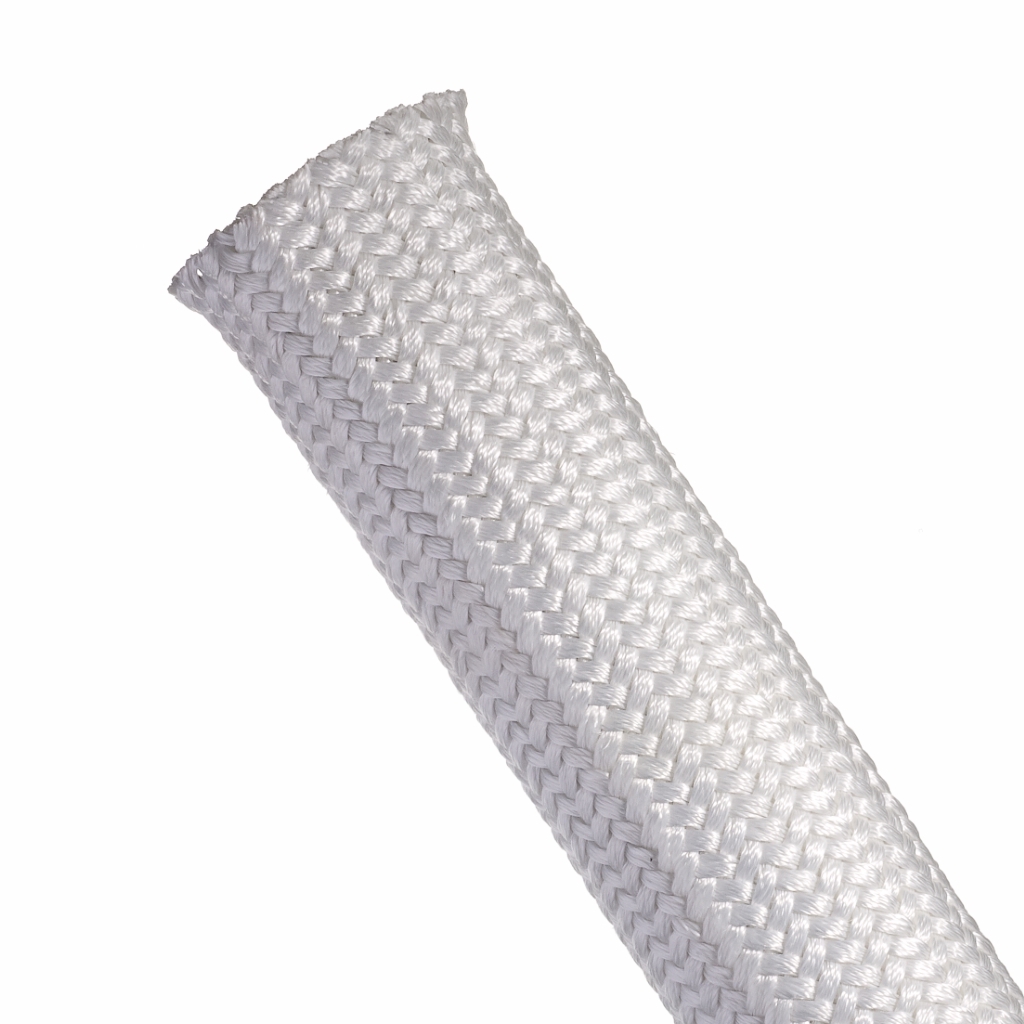
Арукав из высококремниевого волокнаТаким образом, он занимает важное место между гибкими защитными рукавами общего назначения и гораздо более тяжелыми огнеупорными изоляционными системами.
Температура источника тепла не равна температуре шланга.
Это различие имеет значение практически в каждом проекте, связанном с высокотемпературными защитными кожухами.
Если температура выхлопной поверхности составляет 800 °C, это не означает автоматически, что расположенный рядом шланг также подвергается воздействию этой температуры.
Аналогично, печь с температурой камеры 1000 °C не означает, что каждый кабель, находящийся вне корпуса печи, должен быть изготовлен из материала, рассчитанного на прямой непрерывный контакт при температуре 1000 °C.
При выборе рукава следует учитывать несколько различных температурных режимов, которые необходимо разделить:
| Температурная точка | Что это представляет собой | Почему это важно |
|---|---|---|
| температура источника тепла | Температура выхлопных газов, стенок печи, труб или технологического оборудования. | Определяет степень интенсивности теплового воздействия. |
| Местная температура окружающей среды | Температура воздуха вокруг рукава | Важно при длительном воздействии |
| температура внешней поверхности рукава | Температура, непосредственно воспринимаемая текстилем | Имеет отношение к долговечности материала. |
| Температура под рукавом | Температура, достигающая защищаемого компонента. | Критически важен для фактической эффективности защиты. |
| Предельная температура компонента | Максимально допустимая температура шланга, кабеля, уплотнения или провода. | Определяет реальную инженерную цель |
Правильно выбранныйвысокотемпературная кремниевая гильзаОценка должна проводиться по всей тепловой цепи, а не только по самому высокому значению, указанному в технической спецификации оборудования.
Часто именно лучистое тепло является скрытой проблемой.
Многие поломки шлангов и кабелей происходят без прямого контакта с горячей поверхностью.
Тепловое излучение распространяется в открытом пространстве. Турбокомпрессор, коллектор, дверца печи, нагретая форма или раскаленный металлический компонент могут непрерывно излучать энергию в сторону расположенного рядом оборудования.
Именно поэтому шланг может демонстрировать признаки термического старения, даже если монтажник отчетливо видит воздушный зазор между шлангом и источником тепла.
Высококачественная кремниевая оболочка создает тепловой барьер вокруг компонента, подвергающегося воздействию излучения.
Результат зависит от нескольких переменных:
- расстояние от источника тепла
- температура поверхности источника
- угол экспозиции
- толщина гильзы
- движение воздуха
- продолжительность воздействия
- temperature limit of the component beneath the sleeve
Reducing radiant exposure can be particularly valuable around hydraulic hose covers, electrical cable jackets and polymer tubing, all of which may have considerably lower temperature limits than the surrounding metal equipment.
Continuous Heat and Short Heat Peaks Should Not Be Treated the Same Way
A common purchasing mistake is comparing sleeve materials only by the highest temperature printed on a datasheet.
Maximum temperature and continuous operating temperature serve different purposes.
A material may tolerate a severe temperature for a short event without being the preferred choice for thousands of hours at that same level.
For high silica sleeve projects, specify at least:
- normal operating temperature
- maximum expected temperature
- duration of the maximum temperature
- number of thermal cycles
- whether the sleeve cools completely between cycles
This information is more useful than simply writing "need 1000°C sleeve" on an inquiry.
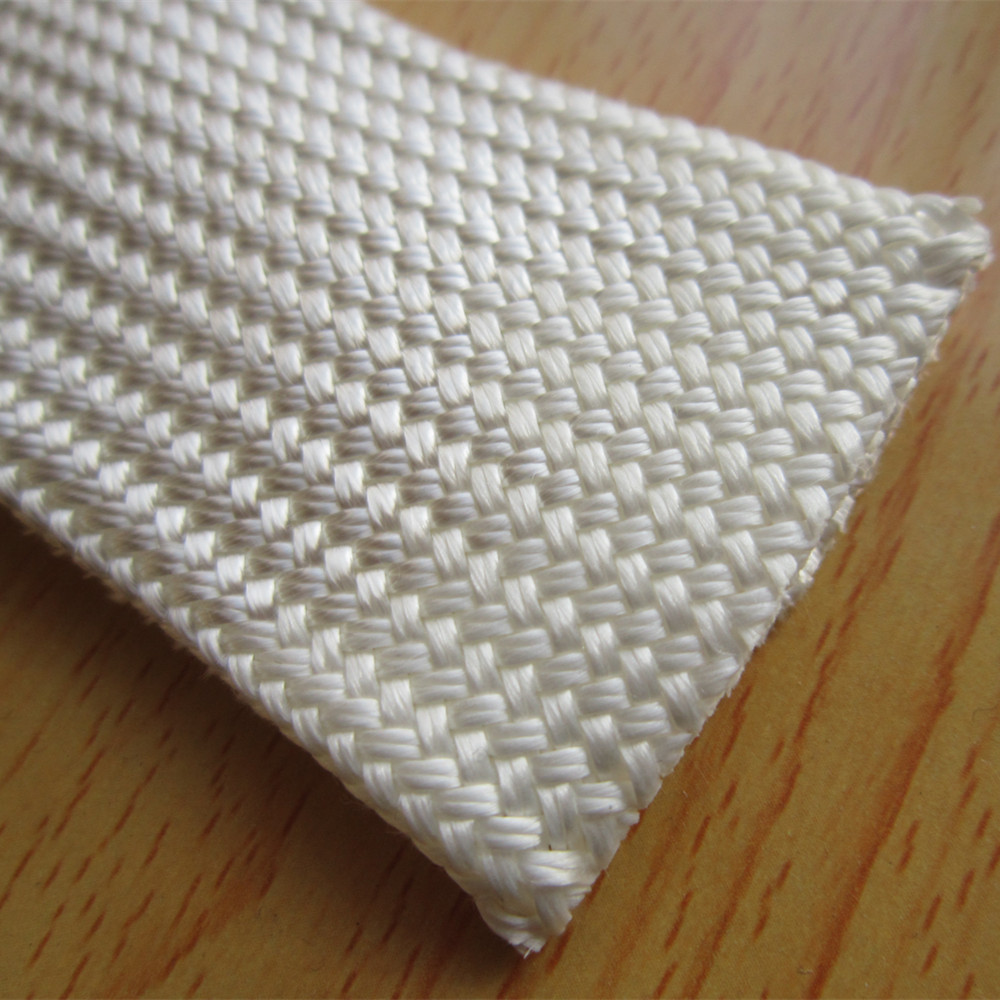
Braided High Silica Sleeve for Compact Thermal Protection
Braiding is particularly useful when the protected component moves, bends or passes through a restricted area.
Multiple silica yarns cross around the circumference of the sleeve, forming a coherent tubular structure without turning the material into a rigid pipe.
The construction can follow curved hose and cable routes while remaining stable during handling.
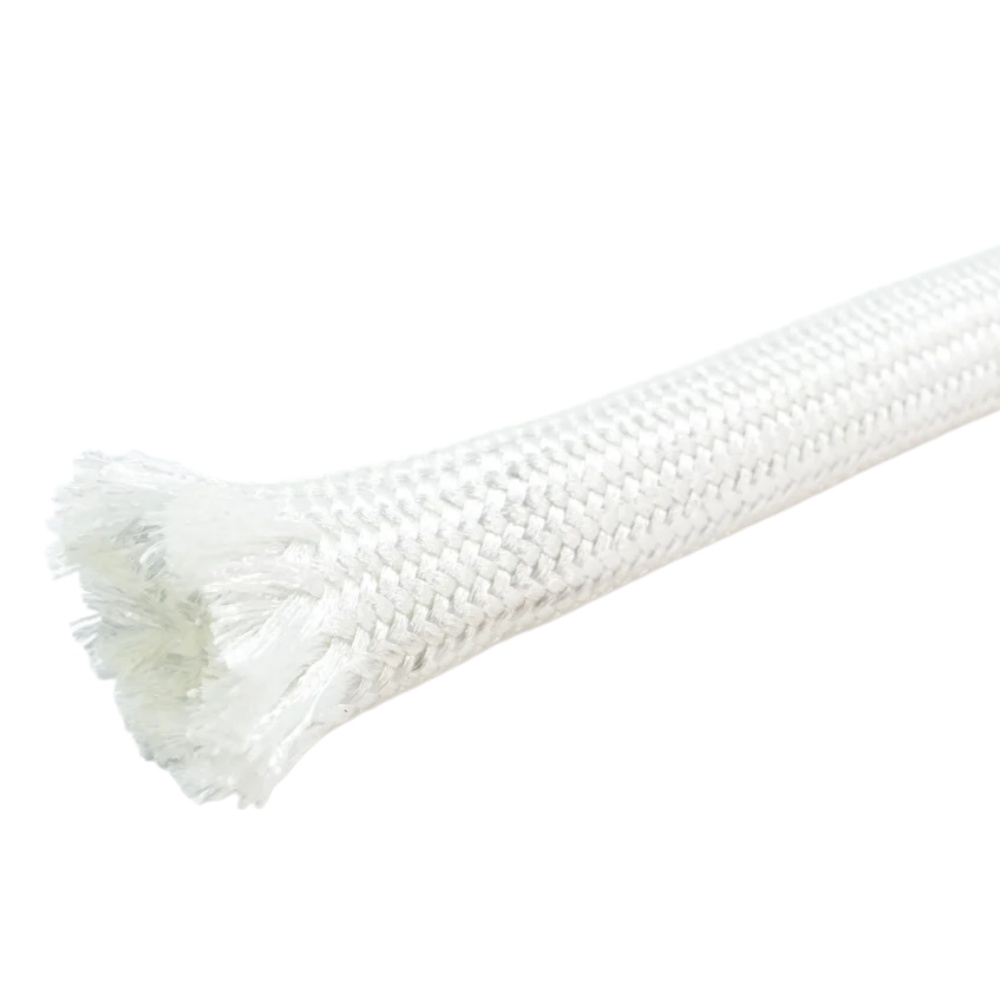
BSTFLEX manufactures aHigh Temperature Resistant Braided Silica Sleevefor severe thermal environments.
The current specification for this particular braided construction lists a maximum temperature resistance of up to 1,200°C.
Typical candidates for braided construction include:
- hydraulic hoses
- electrical cables
- wire bundles
- sensor lines
- small process tubing
- engine components
- lines routed beside exhaust equipment
Where More Insulation Volume Is Needed
Not every installation benefits from the most compact sleeve possible.
Stationary pipework, furnace service connections and some industrial hose assemblies may benefit from a bulkier textile structure.
Texturized silica yarn introduces additional fiber volume into the sleeve wall. That structure can create more trapped air within the textile and increase the physical distance through which heat must pass.
For this type of requirement, BSTFLEX also supplies aHeat Insulation Texturized Silica Sleeve.
The decision between compact braided construction and bulkier insulation construction should be based on the installation rather than on product appearance.
High Silica Sleeve Around Hydraulic Systems
Hydraulic systems create a difficult protection problem because the hose often has to remain flexible while operating close to machinery that generates substantial heat.
Common examples include:
- steel production equipment
- die-casting machinery
- foundry equipment
- forging lines
- industrial presses
- mobile diesel machinery
- furnace service systems
- heavy manufacturing equipment
When a hydraulic line is exposed to severe radiant heat, the outer rubber cover may age faster even though hydraulic fluid temperature remains within specification.
A high silica sleeve can be installed as an external textile barrier around the hose.
For this application, engineers should check:
| Item to Check | Reason |
|---|---|
| Hose outside diameter | Determines basic sleeve size |
| Ferrule or fitting diameter | May control installation clearance |
| Minimum bend radius | Prevents an oversized wall construction from restricting movement |
| Heat-source distance | Strongly affects radiant heat load |
| Hose cover temperature limit | Defines the protection target |
| Movement and abrasion | Affects construction choice and expected service life |
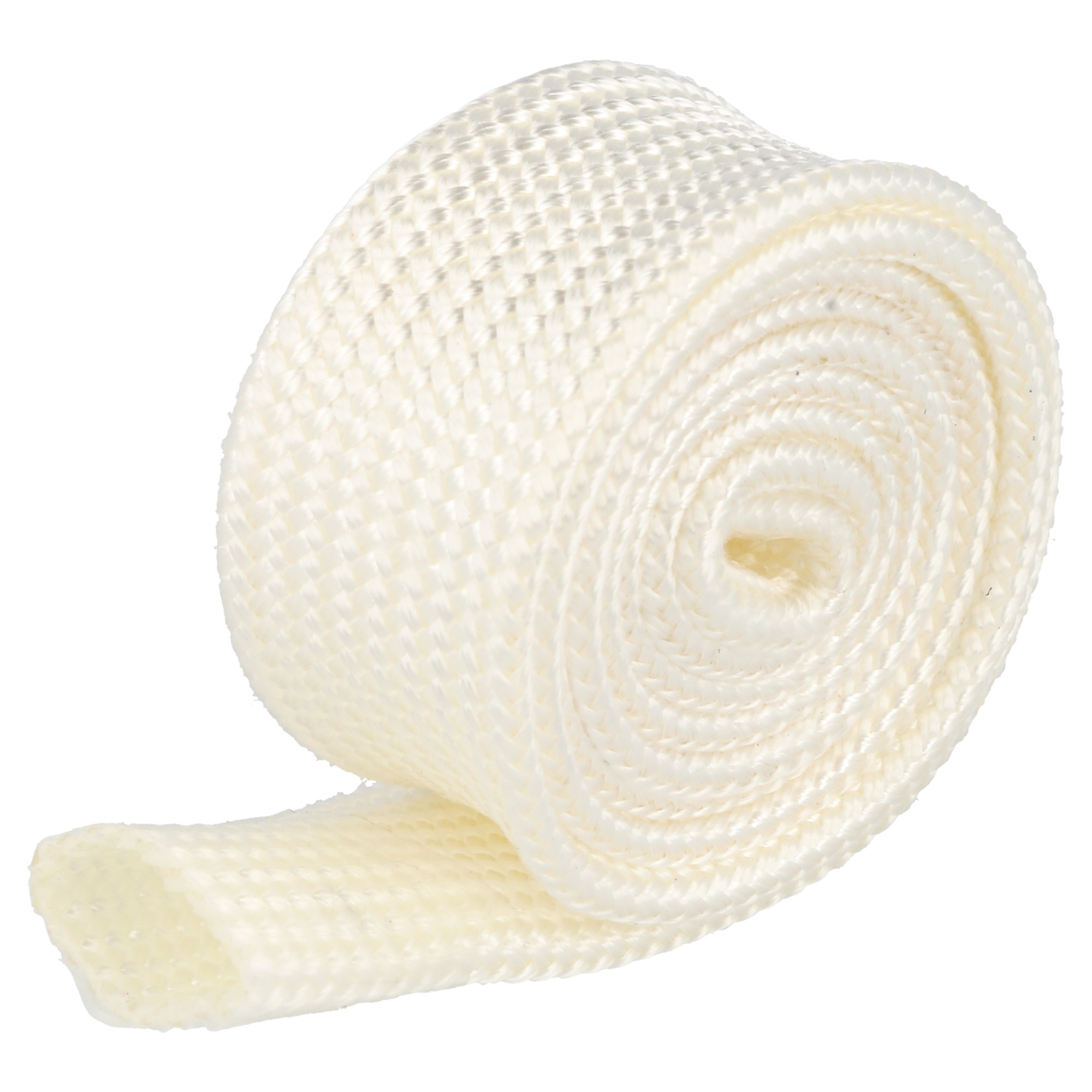
High Silica Sleeving Near Exhaust Equipment
Exhaust systems are one of the clearest examples of concentrated heat inside a limited space.
Diesel engines, turbochargers, exhaust manifolds, generator sets and industrial engines may place wiring, hoses and instrumentation only a short distance from hot exhaust components.
Ahigh silica sleeve for exhaust-adjacent protectioncan be installed around the sensitive component rather than around the exhaust itself.
This distinction changes the design objective.
When the sleeve surrounds a cable or hose near an exhaust:
The objective is protection.
When insulation surrounds the exhaust pipe directly:
The objective is heat containment.
The same material family may appear in both systems, but the required wall structure, installation method and thermal calculation can be different.
Furnace Applications: Look Outside the Chamber
High silica sleeve is often useful around furnace equipment without ever entering the hottest part of the furnace.
External systems still face demanding temperatures around:
- burner assemblies
- furnace doors
- inspection ports
- thermocouple connections
- electrical service cables
- hydraulic and pneumatic lines
- process piping
These components may be exposed to long-duration heat shift after shift.
For such projects, the actual measured temperature at the sleeve location is normally more valuable than the furnace's advertised chamber temperature.
Foundry and Casting Equipment
Foundry environments combine radiant heat, hot equipment, mechanical movement and the possibility of molten-metal exposure.
These conditions should not be reduced to one generic "high-temperature" requirement.
A high silica fiber sleeve may be appropriate for protecting hoses and cables from furnace radiation and nearby hot surfaces.
However, if direct molten-metal splash is expected, the project needs a separate hazard assessment.
The temperature resistance of the fiber alone does not prove that every sleeve construction will safely shed molten aluminum, iron or steel.
For splash exposure, information should include:
- metal type
- molten-metal temperature
- expected splash quantity
- angle of impact
- duration of contact
- required surface coating or treatment
This distinction prevents high-temperature resistance from being confused with molten-metal performance.
Steel Mill Applications
Hydraulic hose and electrical cable often have to run through hot zones in steel processing plants.
Potential areas include:
- continuous casting equipment
- rolling mills
- reheating furnace areas
- hot strip processing
- ladle equipment
- material handling systems
In these environments, temperature is often only one part of the problem.
A sleeve may also encounter scale, abrasion, vibration and mechanical contact. The complete protective system should therefore be selected around the real location rather than using high silica fiber as a universal solution.
High Silica Sleeve for Electrical Cable and Instrumentation
Electrical systems frequently contain materials whose thermal limits are much lower than those of nearby metal equipment.
Insulation compounds, connectors and sensor interfaces may be the weakest points.
A high silica sleeve can provide an external thermal barrier around:
- power cables
- sensor wiring
- thermocouple leads
- control cables
- engine wiring harnesses
- furnace instrumentation
- generator wiring
It is important to separate two specifications.
Thermal insulation:reducing heat reaching the cable.
Electrical insulation:preventing electrical conduction or providing a defined dielectric rating.
A silica sleeve selected for heat protection should not automatically be assigned an electrical dielectric rating unless that performance is independently specified and tested.
Pipe and Tube Insulation With High Silica Fiber
Small-diameter process piping can be awkward to insulate with conventional removable blankets or fabricated metal jackets.
Flexible silica sleeving can offer a practical alternative where the geometry permits tubular installation.
Typical examples include:
- hot gas lines
- generator exhaust connections
- industrial engine tubing
- heated process pipes
- laboratory furnace connections
- high-temperature instrumentation tubing
Direct pipe insulation should be evaluated according to heat loss and desired outer-surface temperature, not only according to whether the silica fiber survives the pipe temperature.
How Much Temperature Margin Should Be Allowed?
Running any thermal protection material continuously at the edge of its maximum published capability is rarely the preferred engineering approach.
Real equipment does not remain perfectly constant.
Temperature spikes occur. Airflow changes. Production rates increase. Exhaust regeneration events raise local heat. Deposits accumulate. Hoses move closer to hot surfaces. Maintenance changes routing.
A practical design therefore includes thermal margin.
The amount of margin depends on:
- severity of failure if protection is lost
- accuracy of available temperature data
- thermal cycling frequency
- continuous versus intermittent exposure
- airflow stability
- distance from the heat source
- expected service life
A critical hydraulic line beside a furnace deserves a more conservative approach than a non-critical cable exposed only during occasional equipment warm-up.
High Silica Sleeve vs Adding More Fiberglass Layers
When temperatures rise, it can be tempting to keep increasing the thickness of an existing fiberglass solution.
That approach has practical limits.
| Engineering Question | Additional Fiberglass | High Silica Sleeve |
|---|---|---|
| Need more insulation thickness? | Can help | Can help depending on construction |
| Fiber temperature capability already becoming limiting? | Additional thickness does not change base fiber chemistry | Higher-silica fiber may provide greater thermal margin |
| Limited installation diameter? | More layers increase bulk | Can provide another material option without simply stacking layers |
| Need flexible hose protection? | Possible | Well suited in braided constructions |
| Extreme industrial thermal environment? | Application dependent | Often considered when conventional glass approaches its limit |
The correct decision is not "silica is always better." It is whether moving to a different fiber system solves the actual thermal limitation more effectively than simply adding material thickness.
High Silica Does Not Solve Every Hazard
A high temperature rating can create a false sense that one sleeve can handle every severe industrial environment.
That is not the case.
High silica fiber does not automatically provide:
- oil sealing
- waterproofing
- chemical resistance to every fluid
- high abrasion resistance against sharp metal edges
- electrical dielectric certification
- molten-metal splash resistance
- flame resistance for every specified test method
If the application includes several hazards at once, a different coating, outer layer or sleeve system may be required.
The best high-temperature protection system is often selected by identifying the dominant failure mechanism first.
Braided High Silica Sleeve or Texturized Silica Sleeve?
| Project Condition | Preferred Direction to Evaluate |
|---|---|
| Flexible hydraulic hose | Braided silica sleeve |
| Tight engine compartment | Compact braided construction |
| Electrical cable routing | Braided silica fiber sleeve |
| Stationary hot pipe | Texturized or heavier insulation construction |
| Need increased textile insulation volume | Texturized silica sleeve |
| Frequent bending | Evaluate braided construction |
| Long-duration stationary thermal insulation | Evaluate wall thickness and texturized construction |
These are selection directions, not fixed rules. Diameter, temperature and installation geometry can change the preferred solution.
Information Needed for an Extreme-Temperature Sleeve Project
A useful technical inquiry can often be summarized on one page.
For BSTFLEX to evaluate a high silica sleeve application, provide the following information whenever available:
- Protected component:hose, cable, wire, pipe or another assembly.
- Outside diameter:including the largest fitting or connector the sleeve must pass over.
- Heat source:exhaust, furnace, engine, heated pipe, molten process or other equipment.
- Heat-source temperature:normal and peak.
- Distance from heat source:particularly important for radiant heat.
- Local ambient temperature:where known.
- Maximum allowable component temperature:if specified by the hose, cable or equipment manufacturer.
- Exposure duration:continuous, cyclic or short peak.
- Movement:stationary, vibrating, flexing or repeatedly bending.
- Other hazards:oil, abrasion, molten splash, weather or chemical exposure.
- Required length and quantity.
Photographs, drawings and actual temperature measurements can make product selection considerably more accurate.
BSTFLEX High Silica Sleeve Options
BSTFLEX supplies silica sleeving for industrial thermal protection through different textile constructions.
High Temperature Resistant Braided Silica Sleeve
Designed for flexible thermal protection where a mechanically stable tubular braid is preferred. Applications include hoses, cables, wiring and equipment positioned close to severe heat sources.
View Braided High Silica Sleeve
Heat Insulation Texturized Silica Sleeve
Designed for applications where a bulkier silica textile structure and increased insulation volume are desirable around pipes, hoses and industrial equipment.
View Texturized Silica Insulation Sleeve
For the complete product family, visit theSilica Sleevecategory.
Questions Engineers Frequently Ask About High Silica Sleeve
What is a high silica sleeve?
A high silica sleeve is a flexible tubular thermal protection product manufactured from silica-rich fiber yarn. It is generally selected when hoses, cables, wires or pipes require protection in thermal conditions more severe than those normally handled by conventional fiberglass sleeving.
Where is high silica sleeving normally used?
Typical locations include exhaust systems, furnaces, foundries, steel plants, engines, heat-treatment equipment, industrial ovens and machinery containing high-temperature hoses, cables or piping.
Can high silica sleeve be installed over a hydraulic hose?
Yes. Braided silica sleeves can be used as external thermal protection for hydraulic hoses exposed to radiant or ambient heat. Hose diameter, fittings, bend radius, abrasion and the actual thermal environment should be reviewed before selection.
Can high silica sleeve be used around exhaust components?
Yes. It can protect cables, hoses and wiring positioned near exhaust pipes, manifolds and turbochargers. Direct insulation of an exhaust pipe is a different application and should be evaluated according to pipe temperature, diameter and required heat containment.
Does high silica sleeve work against radiant heat?
Silica sleeving can form part of a radiant-heat protection system by creating a high-temperature textile barrier between the heat source and the protected component. Actual performance depends on distance, sleeve construction, exposure time, airflow and source temperature.
Is maximum temperature the same as continuous temperature?
No. Maximum or peak temperature and continuous operating temperature describe different exposure conditions. Product selection should consider both values and the duration of each exposure.
Is high silica sleeve always better than fiberglass sleeve?
No. Standard fiberglass remains a cost-effective material where its thermal capability is sufficient. High silica fiber is generally considered when greater temperature capability or additional thermal margin is required.
Which is better, braided or texturized silica sleeve?
Braided construction is often preferred where compactness, flexibility and dimensional stability are important. Texturized construction can be considered when greater textile volume and thermal insulation are priorities.
What size high silica sleeve should I order?
Используйте наибольший внешний диаметр, через который должна проходить муфта, а не только номинальный размер шланга или кабеля. Также необходимо учитывать фитинги, соединители и способ установки.
Может ли компания BSTFLEX изготовить силиконовые герметики по индивидуальному заказу?
Да. Компания BSTFLEX может оценить индивидуальные требования к внутреннему диаметру, длине, конструкции, упаковке и другим параметрам OEM-производителя в зависимости от области применения.
Прежде чем выбирать втулку, определите проблему, связанную с перегревом.
Для проектов, работающих в условиях высоких температур, наиболее полезный запрос предложений содержит не только диаметр втулки и температурный показатель.
Отправьте в BSTFLEX размеры компонента, температуру источника тепла, расстояние от источника тепла, требуемый предел температуры компонента, рабочий цикл, а также любые механические или экологические опасности. Наша команда сможет оценить, какой вариант теплозащиты будет более подходящим: плетеная высококремниевая оболочка, текстурированная кремниевая изоляционная оболочка или другая конструкция.
Запросить ценовое предложение на рукав с высоким содержанием кремнезема


 Specated Ipv6 Network